As Tunisia confronts one of the most severe water-scarcity challenges in the region, a young startup from Tunis is pioneering a data-driven approach to help businesses understand, manage and ultimately reduce their water consumption. One of Tunisia’s first Orange Corners Innovation Fund (OCIF) winners, WaterSec tackles the worsening water crisis with technology. We sat down with Mohamed Guebri, WaterSec’s technical lead, to explore how their sensors, data platform and AI-powered insights are transforming the way businesses monitor and optimise their water use.
Hi Mohamed! Could you introduce WaterSec?
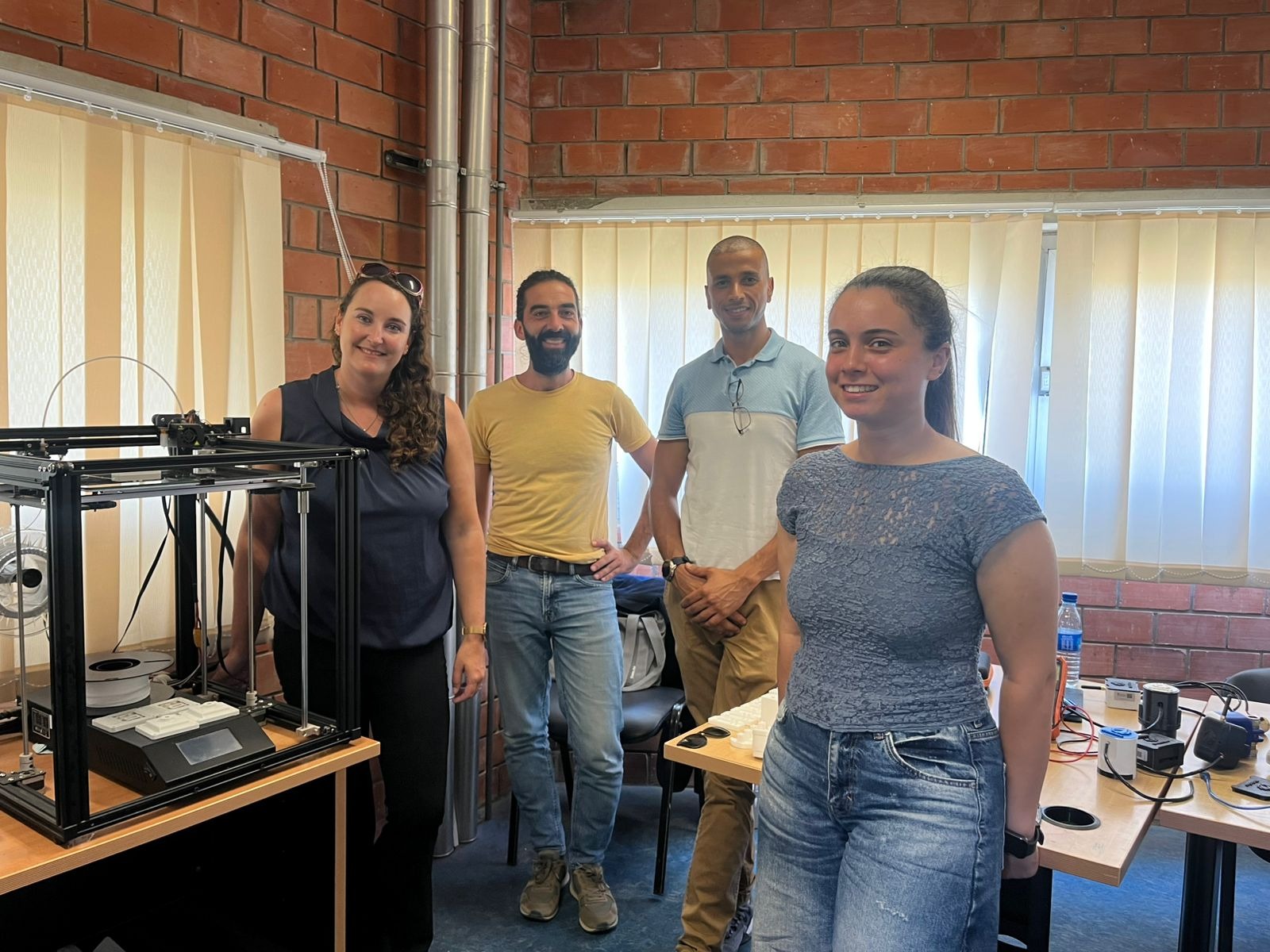
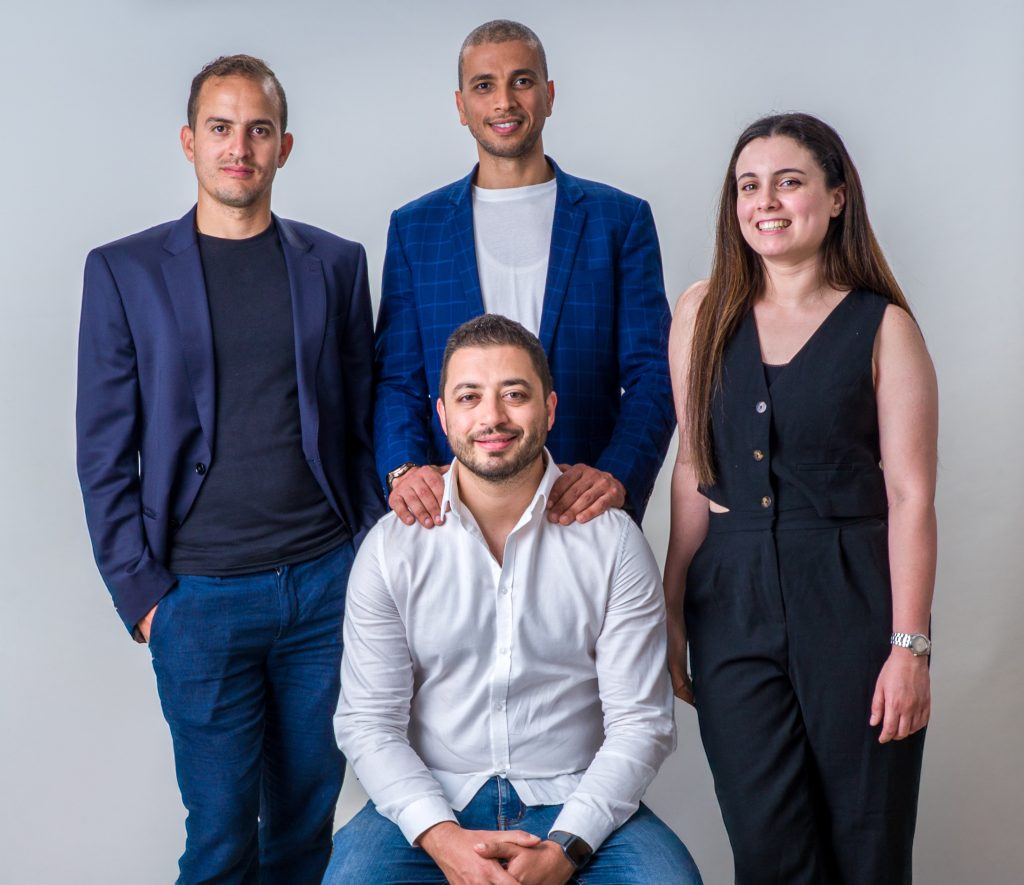
WaterSec is a Tunisian startup which helps businesses and citizens consume water more responsibly, based on data and technology. We’re a team of 5 engineers, who all met 10 years ago while studying at INSAT. We weren’t particularly close back then, and after graduation we all went our own way. We didn’t meet again until the COVID period, which led us to reflect on how to follow governments recommendations about handwashing in countries where water is not granted. Motivated by the drive to do something about the water situation in our region, we started WaterSec in 2022.
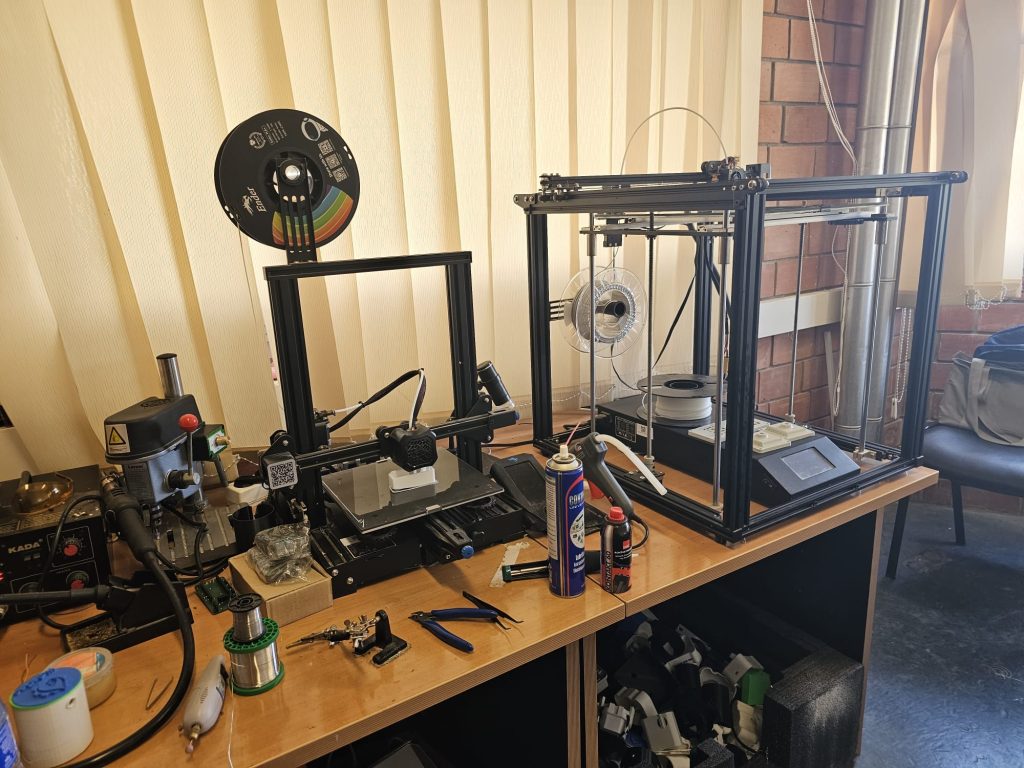
As WaterSec, we do a number of different things. First of all, we provide hardware for water management, to measure water use. Our sensors measure real-time information about water consumption. Because without measuring, you can’t really make informed decisions. In most buildings, water consumption is only measured at one point, when water enters the building. This doesn’t give you enough data on the water consumption per department or in different parts of the production process for example. Our sensors help track that in real time. Combining all these data, we’ve developed AI layers building different consumption patterns – patterns to base recommendations and decisions on. And finally, we alert about abnormal use, which can mean either overconsumption or a leak. Building owners get notifications when anomalies happen.
Currently, we mainly focus our work for B2B clients. We have products targeted at buildings, such as hotels, gyms, malls, and products for industries that consume a lot of water, such as textiles, agrifood or the pharmaceutical sector. Despite all the added value we could offer to B2C consumers, the price of water in Tunisia is too low to justify the financial investment for regular households. But for businesses, the price per cubic meter is much more expensive – about 10 times as much as the price for consumers. Added to that, the regulations on natural resources consumption are becoming more and more strict. Our customers also want to get some control over their water use. A hotel manager for example, whose clients don’t pay the bill. We help them set up an action plan to reduce consumption. For example, we found even showing the water consumption in a building at the entrance will encourage employees and visitors to reduce their consumption.
This is ultimately the core of what we do: changing consumer behaviour. To make the relation between people, businesses and water more responsible. This can be only be done based on factual information though. As WaterSec, we’re making something that was once abstract – how people consume water – visible and we provide recommendations how people can reduce their consumption.
Changing consumer behaviour is ultimately the core of what we do. To make the relation between people, businesses and water more responsible.
Why is water such an important topic in Tunisia?
In Tunisia, we’re facing a massive water scarcity. We’re currently below 400 cubic meters of water per person per year, which is far under the scarcity threshold – indicating how catastrophic the situation is. Although we’ve seen some improvement recently thanks to rainfall, the projections remain critical. The World Economic Forum, in their Global Risk Report 2025, listed water shortage as the top national risk for Tunisia in the coming years.
Our data also provide factual numbers for the government to base decisions on. Because tomorrow people are going to ask about their right to water, they’re going to ask why this industry gets allocated so much water, while others don’t have access to water at all. Having hard data provides you with a layer of transparency, to give everyone their fair share of water. Our dataset is really unique in its depth, going all the way down to the level of ‘at 1 am, one litre of cold water was used in the kitchen’. That wealth of data, there’s few others out there who can break down how millions of litres of water are used on a daily basis.
Our innovation is not mainly in the hardware, but in that data. There’s a lot of sophisticated hardware on the market, but what we sell is the minimum hardware needed to catch the information we want, because we want to make the product affordable while offering the added value needed. Businesses get annual subscriptions to get access to a dashboard and the mobile app. This gives them access to the data, consumption patterns and our personalised recommendations to reduce their water consumption.
We’re currently below 400 m2 of water per person per year, which is far under the scarcity threshold. The World Economic Forum even listed water shortage as the top national risk for Tunisia in the coming years.
You were part of the first OCIF cohort in Tunisia. Can you share something about your future plans and how you intend to use the 30,000 euros you just won?
As we want to scale up our sales, we need considerable investment to enhance and ramp up our production. We intend to use the OCIF investment for a number of different things, such as marketing, improving our hardware and expanding our production capacity. For example, our plans include a mini industrialisation for our production, which will have a positive impact on the product both in terms of quantity as well as quality, as the unit price will go down and the reliability of the product will improve.
We’re also looking to expand our market access in Southern Europe and the MENA region. As a first step, we’re aiming to expand our reach to south of Europe to gain European references and enhance our R&D work. In Tunisia, importing electronics hardware is not that easy, and France, the first market we aim to penetrate, will give us more flexibility to get the technology we want. It makes sense to move the R&D eventually to Europe. It’s just an one-hour flight between the south of France and Tunisia, so it’s easy for teams on both sides of the Mediterranean to collaborate. And after that, we aim to expand our sales to other countries in the MENA region affected by water scarcity: Algeria, Saudi Arabia, the UAE, Qatar and to the south Europe – mainly Italy and Spain.
Is OCIF your first investment?
We’ve already raised several rounds of funding. During the pre-seed phase, we raised investment from Flat6Labs, which played a key role in enabling us to develop and deliver our first functional prototypes. We were later supported by AMZA VC, a Tunisian venture capital fund, whose involvement helped us strengthen and structure our sales efforts and open new commercial opportunities. In parallel, we benefited from several grants provided by impact-driven NGOs, which supported our environmental and social mission. Finally, Tunisia’s Startup Act label was a significant enabler in the early stages of our journey, providing a favourable framework and a set of incentives that helped us initiate and scale our programmes more efficiently.
Besides money, what else do you need to scale?
Beyond funding, what we need most to scale is access to clients. There’s a vast pool of potential customers globally that we’ve not yet reached. So far, we’ve intentionally limited our promotional efforts, focusing instead on strengthening our hardware and refining our platform. Once the solution reaches full maturity and we transition to mass production and commercial deployment, we’ll significantly accelerate our go-to-market efforts. That said, many of these next steps remain closely tied to funding — whether for scaling production, accessing advanced technologies, expanding internationally or securing intellectual property. Each of these elements is essential to sustainable growth!
Connect with WaterSec online:
Website
LinkedIn
Facebook
Instagram