
Meet Chidimma Uzoma. This Orange Corners Nigeria alumna is the founder and CEO of Zayith Food Company, a Nigeria-based yoghurt company. Eight years ago, conversations with farmers exposed her to the challenge of post-harvest loss. This inspired Zayith’s mission: developing healthy yoghurt products that help address post-harvest loss. What started as a hobby eventually grew into a full-time career, turning her passion into a thriving business. We had the privilege of speaking with Chidimma to hear the story behind Zayith, the company’s growth, and the impact she has made in Nigeria.
Hi Chidimma! Could you introduce yourself and Zayith?
My name is Chidimma Uzoma and I’m the founder and CEO of Zayith Food Company. It all started with me being really enthusiastic about food and the science behind it. In my spare time, I’d go out to rural areas, meet with farmers and just have conversations. It was during those conversations that I first learned about post-harvest loss. So, when I started experimenting with dairy and yoghurts I kept thinking: how do I actually solve this problem? By 2021, when we were developing our yoghurt drinks, I found the answer: the integration of real fruits into our product. Food scientists might call it “food suicide”, because dairy and fresh fruit aren’t typically combined at a commercial scale. Too many things can go wrong… but having personally met these farmers, for me there was no other way.

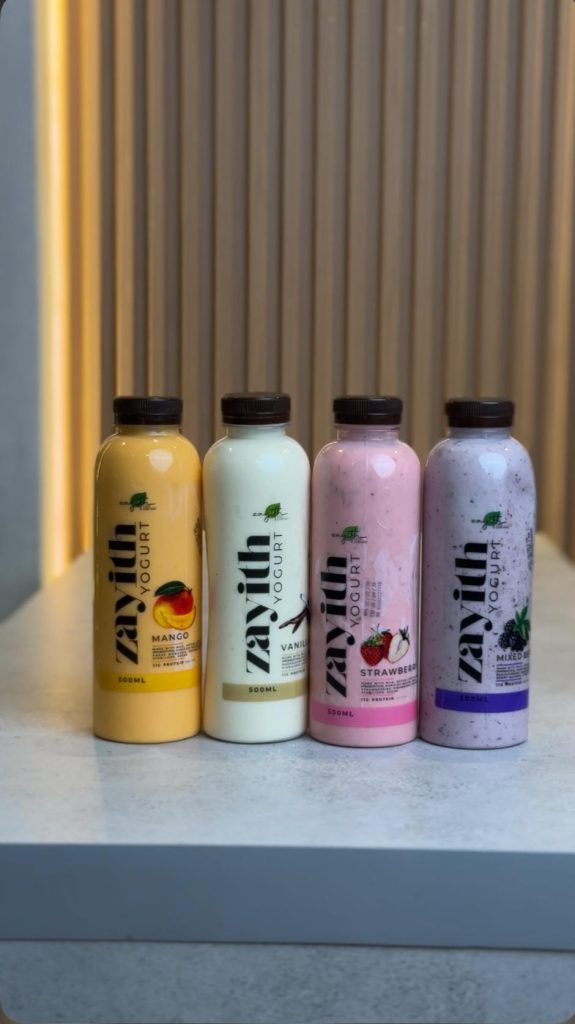
Today, Zayith has two yoghurt drink lines; our classic yoghurt drink in four flavours, strawberry, vanilla, mixed berry and mango, all made with real fruit sourced directly from farmers in Nigeria’s north central region, and a Greek yoghurt line with high-protein and low-fat variants. It all started in my kitchen in 2018. First factory in 2020, second in 2022. We joined Orange Corners, got our first seed funding from the Dutch investment firm Tripple I, and honestly, we’re just getting started!
You joined Orange Corners in 2022. What did Orange Corners mean to you?
Joining Orange Corners was crucial for us, the timing couldn’t have been better. We entered the programme just as our first investment discussions were gaining momentum, so there was a lot on the line. For six months, we worked with FATE Foundation (Orange Corners and OCIF implementing partner in Nigeria) on strengthening key areas of the business, including staffing, supply chain management, marketing, and finance. These were all challenges holding us back. As we addressed them, we became a stronger and more investment-ready company.
But what stood out most wasn’t just the training, it was the people. I remember we had an HR issue at the time, and it was resolved in a single conversation with another founder in the programme. There’s something powerful about being in a room with people who are on the same journey.. it stops feeling like you’re building alone!
The programme also opened doors to valuable networks that continued to support our growth beyond the training itself. Through connections made along the way, we gained access to new funding opportunities and strategic partners. One of these relationships helped finance part of a machinery purchase that significantly increased our production capacity and strengthened our operations. It showed us that the value of Orange Corners extends far beyond the programme period. The network and connections can continue creating opportunities long after graduation.
Being in a room with people who are on the same journey, it stops feeling like you’re building alone!
And how did the Orange Corners Innovation Fund help you scale?
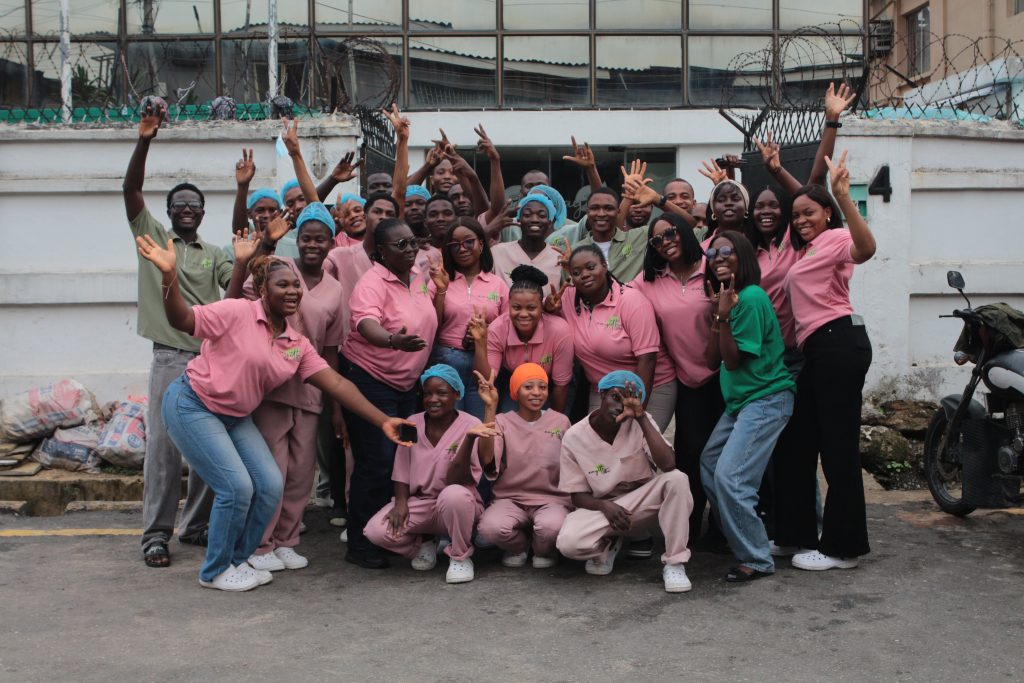
After completing the Orange Corners Nigeria programme, we were selected to continue into the Orange Corners Innovation Fund (OCIF) programme, which provides targeted blended finance to scale promising ventures. When we received support from OCIF, we used the seed funding very intentionally across working capital, capital investment, and marketing. Since 2023, OCIF has been instrumental in our scaling journey, helping us strengthen different parts of the business and grow more sustainably. The impact of the programme is clearly reflected in our growth. Thanks to the combined support of Orange Corners and OCIF, our team grew from 8 people before joining the programme, to 15 shortly after, to nearly 90 people strong today.
As Zayith continues to expand, our focus is now on increasing production capacity and sourcing the right dairy machinery for the next stage of growth. In that process, access to strong networks and trusted introductions is just as valuable as financing itself. We’re currently looking to connect with reputable suppliers of dairy equipment, including opportunities to acquire high-quality second-hand machinery from larger dairy companies.
The Dutch connection has played an important role in that ambition. With our first investor being Dutch, and the Netherlands globally recognised for its expertise in dairy and agriculture, building stronger links with the Dutch dairy ecosystem feels like a natural fit. Looking ahead, I hope to gain more hands-on mentorship and industry exposure from established dairy companies, particularly in the Netherlands. Learning directly from businesses that have successfully scaled in the sector could be transformative as Zayith continues to grow across Africa.
What’s your impact been so far with Zayith?
Beyond our direct team, we’ve created over 300 indirect jobs through farmers, distributors, and the wider value chain. In total, we’re looking at close to 400 to 500 jobs created since the Orange Corners programme! But our impact goes far beyond job numbers. From the very beginning, the whole idea behind Zayith was to find a way to solve post-harvest loss. And the way we’ve translated that into practice is simple: we buy fruits directly from the farmers, without a middleman. That means farmers get the full value of their produce, more money actually reaching their pockets.
We also work predominantly with female farmers, because in the communities we source from, women are the ones doing the farming. And they are the primary caretakers of their families. We believe that when you put money in the hands of a woman, it ripples through the entire household; children eat better, school fees get paid, and there are clothes on their backs.
The volumes keep growing too. Last year we sourced about 10,000 kg of fresh fruit from our farmers. This year, that number has nearly doubled to around 20,000 kg. As we grow, the farmers grow with us. And we’re not stopping there. We regularly sit down with them, have roundtable conversations, to find even more ways to reduce their losses and improve their income.
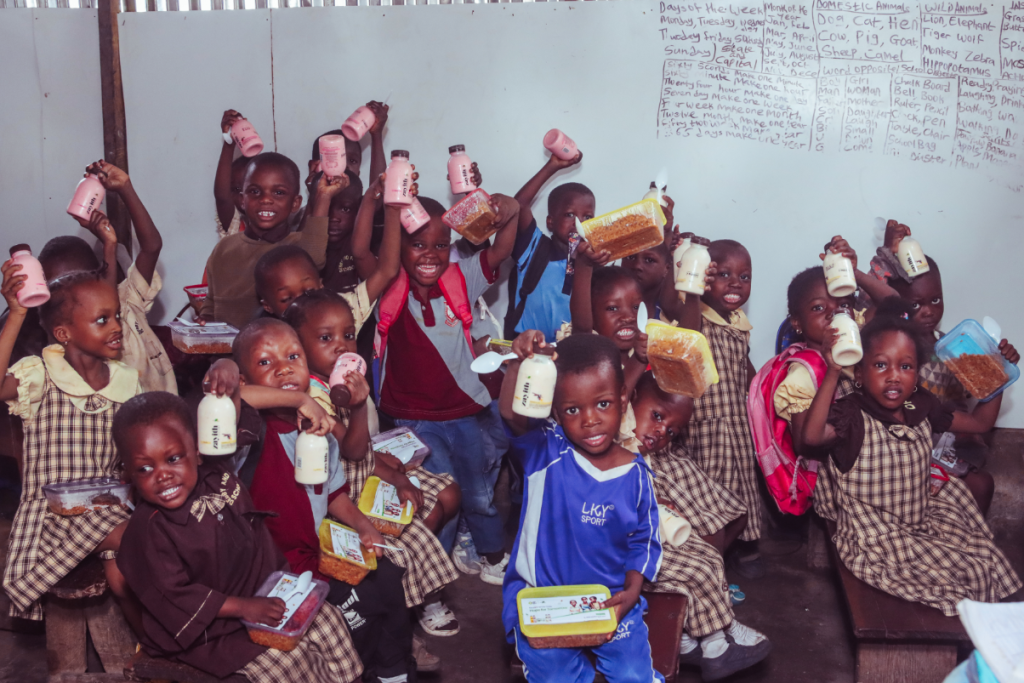
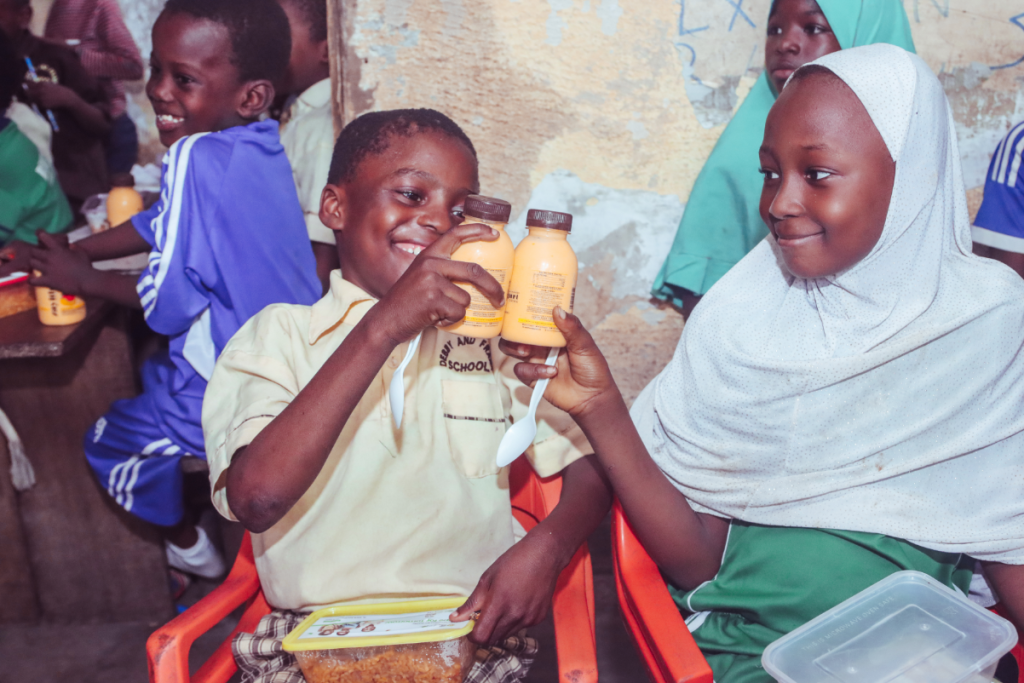
On the consumer side, our main impact is consistent quality. Our vision was always to put products on supermarket shelves that mothers could pick up without having to think twice about. Quality dairy that families deserve to have access to. We have held that standard for eight years, even when the economy made it difficult. And whenever we can, we push it further. We partnered with GAIN Foundation (the Global Alliance for Improved Nutrition) through a programme in collaboration with ECOWAS, where we developed a way to fortify our products with vitamin D, zinc, calcium and iron. We’re directly tackling hidden hunger, particularly for children and women. When someone picks up a bottle of Zayith, they’re getting the best nutrition dairy can offer, that’s our promise!
When someone picks up a bottle of Zayith, they’re getting the best nutrition dairy can offer, that’s our promise!
What business challenges did the collaboration with Rotterdam School of Management students help you address?
That was a remarkable experience. The collaboration was very hands-on and focused on solving real operational challenges within our business. For the first time, our company was analysed from an academic perspective, with students taking a deep dive into our processes, testing assumptions, and helping us identify practical opportunities for improvement. Two ideas stood out. The first was around using our production waste to generate energy for our operations. This was something we had already been exploring, but the students helped us validate the concept and turn it into a more structured roadmap. We’re now actively working towards implementation. The second was the idea of refill stations. Because we package in plastic, managing post-consumer waste is an ongoing challenge. While we were already considering a recycling system, the students proposed a more circular solution. Stations where customers can return and refill their bottles with fresh yoghurt on the spot. It really sharpened our thinking, and we’re currently refining the operational model.
What are the most important barriers you encountered and how did you manage these?
Our product is cold chain end-to-end, so we rely on consistent power 24/7. And consistent power simply doesn’t exist in Nigeria. We generate 100% of our own electricity. In January alone, we had to invest over 100,000 U.S. dollars in a new generator, just to keep the lights on. And then there’s the daily cost of fueling it. We’re looking at solar and cleaner energy solutions, but that’s another major capital investment. And yes, as a woman in manufacturing, people do not always take you seriously walking into a room. It used to bother me. Now I just find ways around it. I believe, even if there are challenges, there’s absolutely nothing you cannot do. The only time you cannot do something is when you decide that you can’t. So, dream and dream as far as you possibly can. Take it seriously, the same way you would take out time for anything that truly matters to you. Sit down, dream big, and don’t put a ceiling on it. And when you’re done dreaming, get up and start executing. There’s really no barrier to what you can achieve.
There are really no barriers to what you can achieve. The only barriers that exist are the ones you accept.
Finally, how do you see the future for Zayith?
We want everyone to experience what we’ve built. The next few years are about solidifying our position in Nigeria and then spreading beyond it, Benin, Togo, Ghana. We have a strong hold on the healthy yoghurt space in Nigeria, and now it’s about going deeper here while pushing into new markets. But our mission stays the same: get quality dairy products to as many people as possible and help people eat better!